 Oahu Whale Watching Tours
What to Wear Whale Watching in Hawaii: Oahu Packing List
What to wear whale watching in Hawaii comes down to layers: a swimsuit or shorts under a light long sleeve for sun, and a windbreaker for the ride back once the trade winds pick up. No listing here boats we compare whale watching cruises on Oahu hand you clothing, but three of the four hand you a drink and two hand you a snack, so the packing list is shorter than it looks. Winter days in Honolulu run 79 to 83°F, warm enough that sunburn is the real complaint in reviews, not cold. The open questions are footwear, sunscreen law, and what to do if the swell makes you queasy, and this guide answers all three before you zip the suitcase.
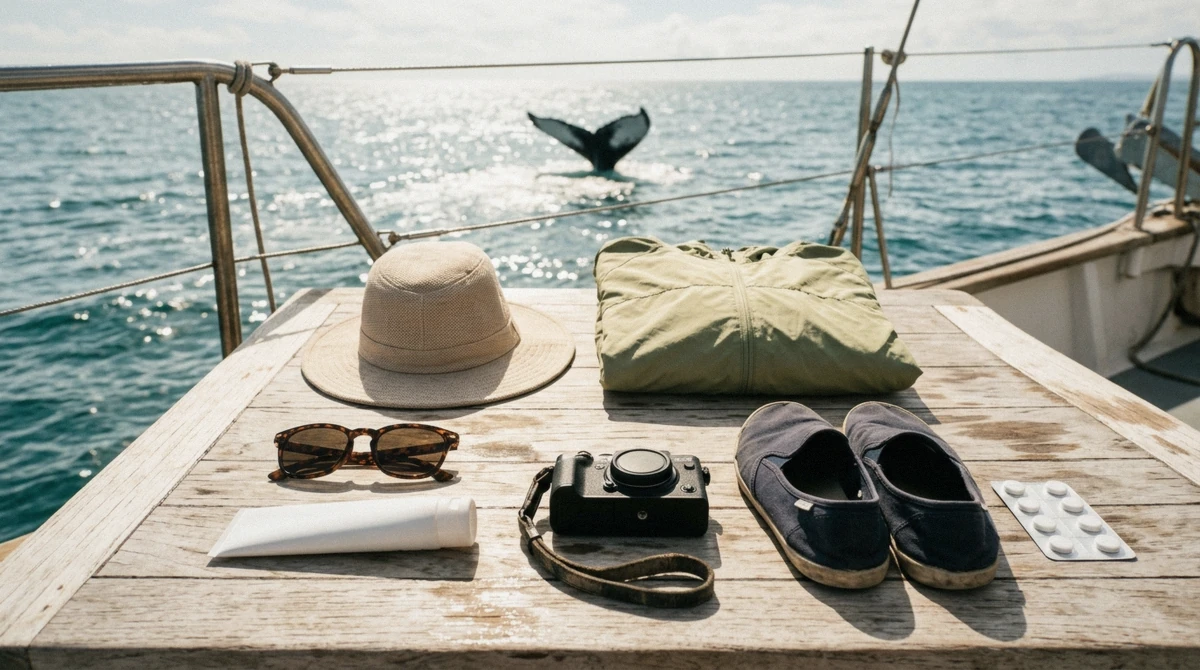
What actually goes in the bag for a morning whale cruise off Waikiki.
Quick answer
No boat in the catalog Oahu whale cruises hand out clothing, so packing for the water comes down to your own choices: a swimsuit or shorts, a rash guard or light long sleeve for the sun, and a windbreaker for the ride back once the wind picks up. Reef-safe sunscreen is not optional under state law, and a seasickness tablet belongs in the bag whether or not you think you will need one.
Key takeaways
- Drinks are covered on three of the four boats, but only the west Oahu sail pours a full bar with the ticket, so check what is and is not included before you pack a cooler
- Snacks ride along on the sunset cruise and the deluxe catamaran; the other two skip them, so eat before you board
- The one thing every boat skips: reef-safe sunscreen. Hawaii's Act 104 bans the reef-toxic kind at the register, so buy compliant sunscreen before you board
- The one thing to leave at home: a cotton hoodie as your only outer layer, it stays wet and cold once spray hits it
- Winter days in Honolulu run 79 to 83°F, warm enough that sunburn is the real risk on this trip, not cold
- Closed-toe shoes or a secured sandal beat flip-flops on a wet, moving deck
What to Wear
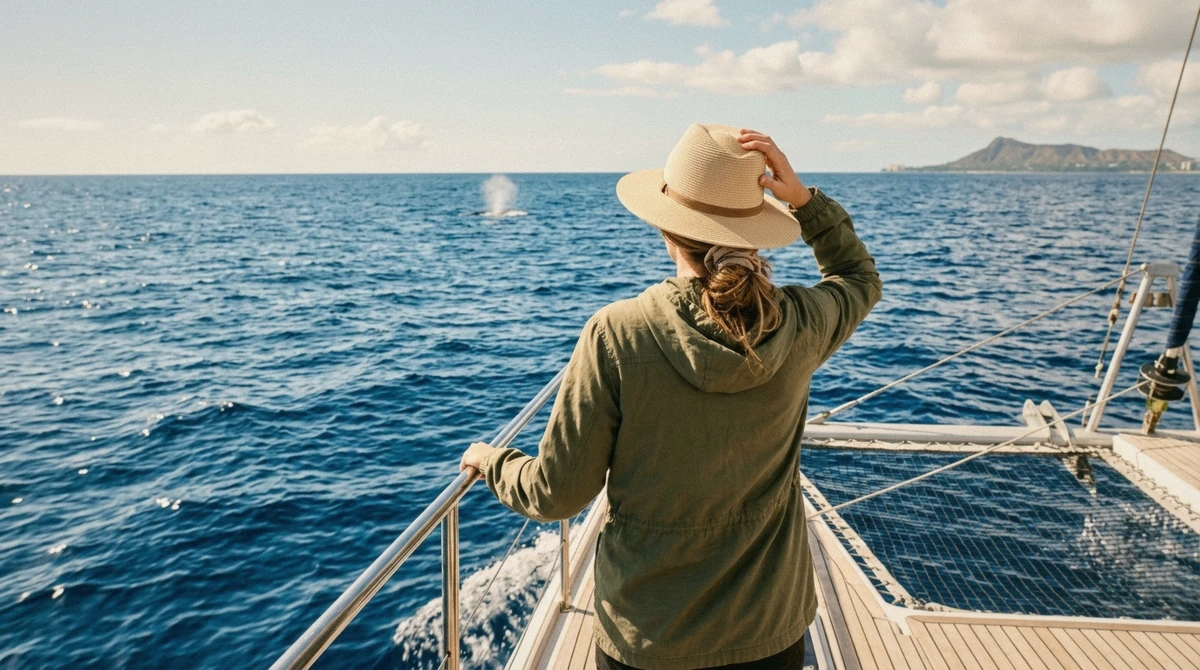
Every one of the four boats sails from a harbor, not a beach, so the dress code is closer to a boat deck than a swim day. Layer for a warm start, a windy middle and a cooling finish.
Base Layer and Swimwear
A swimsuit under shorts or a sundress works fine since nobody swims on these cruises, no listing here operators run a snorkel stop. Quick-dry fabric matters more than the cut: spray reaches the rail seats on a windy day, and cotton against skin for two hours stops being comfortable fast. Loose, quick-dry shorts or leggings beat anything with a tight waistband once you have been sitting on a bench seat for an hour.
Sun Protection
A rash guard or light long-sleeve shirt covers more skin than sunscreen alone and does not wash off with spray, which matters on a two-hour deck with no real shade on three of the four boats. Sunscreen still has to fill the gaps on your face, neck and hands, and Hawaii's own rules on which formula you can buy get their own section below.
Wind and the Ride Back
This is not a wetsuit trip. None of the four operators expects you in the water, so the outer-layer question is really about wind, not water temperature. Trade winds build through the day, so a boat that feels warm at the 8:00 AM check-in can feel genuinely cool by the time it turns for home, especially on the open-air sections of the catamarans.
A packable windbreaker solves this in one item; a light jacket or zip-up works nearly as well.
Footwear
Closed-toe shoes with a real sole, sneakers or boat shoes, give you the most stable footing on a deck that gets wet from spray. A secured sandal with a heel strap is the acceptable second choice. Flip-flops and open-heel sandals are the wrong call on a moving boat, they come off at the worst moment and give you nothing to grip with.
Heels are not a footwear category that belongs on any of these four boats at all.
Color Guide for the Deck
None of the four operators enforces a dress code, so color is about comfort and visibility, not a rule.
| Color | Good? | Why |
|---|---|---|
| White | Good | Reflects the Hawaiian sun and will not show salt-spray stains the way a darker fabric does |
| Black | Caution | Absorbs heat at midday; fine on the sunset cruise once the sun is low |
| Bright red or yellow | Good | Easier for crew and fellow passengers to spot at the rail, and reads well in photos against blue water |
| Neon or hi-vis | Good | Same visibility logic; useful if your group splits up at a crowded harbor dock |
| Earth tones or khaki | Neutral | Fine for travel days but does nothing for you here; there is no wildlife-shyness reason to dress down on a boat |
| Cotton, any color | Bad | Stays wet and cold once spray hits it; the fabric is the problem, not the shade |
| Quick-dry synthetic | Good | Dries in the wind on the ride back, which is the whole point after two hours on open water |
What to Bring
A short list covers nearly everyone's trip. Treat this as the whole bag, not a starting point.
The Bring List
Ten items cover what four different boats and hundreds of reviews flag as actually useful:
- Reef-safe sunscreen: the only formula Hawaii law allows a store to sell you
- Windbreaker or light jacket: wind chill once the boat is moving
- Hat with a chin strap: it loses to the wind otherwise
- Sunglasses, ideally with a strap: two hours of glare off open water
- Dry bag or a ziplock for your phone: spray reaches the upper deck too
- Change of clothes left in the car: salt spray gets nearly everyone a little wet
- Cash, small bills: Pink Sails parking runs cash or Venmo only
- Motion-sickness tablet: take it 30 to 60 minutes before boarding, not at the dock
- Reusable water bottle: there is no real shade on three of the four boats
- Light long-sleeve or rash guard: sun protection that will not wash off
Cash for Parking and Tips
Pink Sails is the one listing where cash actually matters: parking near the dock runs cash or Venmo only, and while gratuities are already built into that $53 price (the only one of the four where that is true), the other three boats leave tipping to you. Hawaii Nautical's deluxe listing suggests 20 percent as customary, which is worth budgeting before you board rather than working out at the dock.
Sunscreen and a dry bag cover most of what the boats leave off their inclusion list.
What Oahu Whale Watching Tours Provide (So You Do Not Overpack)
Inclusions differ more than most first-time bookers expect. This table reads straight from the four listings, not a generic packing blog.
Read the notes column closely: two boats hand you real reasons not to pack extra.
| Item | Usually Provided | Bring Your Own | Notes |
|---|---|---|---|
| Bar drinks | Full premium bar included on both Hawaii Nautical boats; sodas and juice included on the sunset cruise | Pay-as-you-go on Pink Sails | Only the west Oahu sail and the deluxe catamaran pour a genuinely full premium bar, cocktails, beer, wine and juice, in the ticket price |
| Snacks | Light snacks on the sunset cruise; snacks on the deluxe boat | Nothing stated on Pink Sails or the west Oahu sail | Reviewers describe the deluxe boat's snacks as packaged chips, eat before boarding if you want more |
| Reef-safe sunscreen | Not provided by any of the four | Yes, every rider | Buy it before you leave the hotel; see the law below |
| Motion-sickness remedy | Not provided by any of the four | Yes, a tablet from a pharmacy | The sunset cruise crew checks on queasy guests but does not stock medication |
| Shade | Covered and open-air seating on both Hawaii Nautical catamarans | A hat regardless | The double-decker sunset boat also splits covered and open seating |
| Parking | Free and plentiful at Waianae | Cash or Venmo at Pink Sails; a taxi suggested near Kewalo Basin | Waianae is the one harbor where parking is not a planning item |
| Hotel pickup | Optional paid shuttle on the deluxe boat only | A ride to the harbor on the other three | Choose shuttle pricing at booking, it is not something you can add at the dock |
| Gratuities | Already included on Pink Sails | Cash or a tip added at checkout on the other three | Hawaii Nautical's deluxe listing suggests 20 percent as the norm |
What Not to Wear or Bring
A short list of the things reviewers and operators flag as genuine mistakes, not generic travel-blog filler.
- Heels or unsecured flip-flops: a wet deck on a moving boat is a fall waiting to happen
- Cotton as your only outer layer: it does not dry between the dock and the ride home
- A drone: the whale sanctuary discourages flying near wildlife, and no boat in the catalog boats can turn around so you can launch one
- Sunscreen with oxybenzone or octinoxate: illegal to sell in Hawaii since 2021, and most stores near the harbors will not stock it anyway
- Anything you cannot afford to lose overboard: no boat in the catalog offers a locker, keep valuables clipped into a dry bag
Hawaii's Reef-Safe Sunscreen Law
Since January 1, 2021, Hawaii's Act 104 has banned the sale of sunscreen containing oxybenzone or octinoxate, the two chemicals most linked to coral bleaching. The law targets sale, not possession, but in practice it means the sunscreen on Oahu store shelves is already reef-safe; the problem is a bottle you packed from home before the law existed, or one bought somewhere it does not apply. None of the four whale cruises sell or provide sunscreen, so the responsibility sits entirely with you.
Read the active ingredients before you leave the hotel room: zinc oxide and titanium dioxide formulas are the compliant, widely sold choice, and reapplying one before boarding covers a two-hour cruise without much need to reapply on deck.
The Seasickness Kit
Take a motion-sickness tablet 30 to 60 minutes before boarding, not at the dock with the boat already pulling away; by the time symptoms start, the tablet is too late to help much. Which boat you are on matters too: south-shore departures out of Kewalo Basin and Holomoana Street can get choppy on a windy day, and reviewers on Pink Sails and the deluxe catamaran both mention motion sickness on rougher mornings. The west Oahu sail out of Waianae runs the leeward coast, sheltered by the Waianae mountain range, and is the calmer ride of the four if seasickness is your main worry.
Keep a few dollars or a phone with Venmo loaded regardless of which boat you book, Pink Sails' harbor-side parking runs cash or Venmo only, and it is a bad morning to be digging for exact change.
Pack light, dress in layers, buy compliant sunscreen before you board, and the rest of the trip takes care of itself. The boats supply the drinks, the snacks and the whales; you supply the sunscreen, the windbreaker and a tablet if you are prone to motion sickness.
Is it cold whale watching in Hawaii?
Not by most standards: winter daytime highs in Honolulu run 79 to 83°F. The cold complaint that shows up in reviews is really wind chill once the boat picks up speed, which a windbreaker solves. Sunburn, not cold, is the more common problem on the south-shore boats.
What should I not bring on an Oahu whale watching tour?
Skip sunscreen with oxybenzone or octinoxate (illegal to sell in Hawaii since 2021), a drone, and anything you cannot afford to lose overboard, since no boat in the catalog offers a locker. See the full list above.
Is morning or afternoon better for whale watching on Oahu?
Mornings tend to have calmer water on the south shore before trade winds build through the day, which is one reason Pink Sails runs its departures at 8:00 and 10:30 AM. The sunset cruise trades some of that calm for skyline light instead.
How do you dress in Hawaii and not look like a tourist?
For a whale cruise specifically, this matters less than comfort: quick-dry fabric, a rash guard over a printed cover-up, and closed-toe shoes over flip-flops read as prepared rather than touristy, and they also happen to be the practical choice on a wet deck.
Can I wear jeans on a whale watching cruise?
Better not to. Jeans do not dry between a wave of spray and the ride home, and wet denim restricts movement on a rocking deck. Quick-dry shorts or leggings do the same job without the discomfort.
Can I wear shorts on the boat?
Yes, and shorts are the standard choice across all four boats. Stick to a quick-dry material rather than cotton, since spray reaches the rail seats on a windy crossing.
Do I need seasickness tablets for a whale watching tour?
If you are at all prone to motion sickness, yes, and take it 30 to 60 minutes before boarding. The west Oahu sail runs the calmer leeward route if you would rather pick the gentler boat than rely on medication alone.