 Oahu Whale Watching Tours
Oahu Whale Watching Season: Month-by-Month Guide
The oahu whale watching season runs from mid-December through April, with the strongest odds in January, February and March, when humpbacks are established in Hawaiian waters and sightings are close to routine. Outside that core window, the picture gets messier: the four whale watching tours on Oahu compared here each print a different start and end date, and no-whale reviews cluster at both edges of the season rather than the middle. This guide breaks the season down month by month, explains why the operators disagree, and points to the departures that fit each stretch of winter.
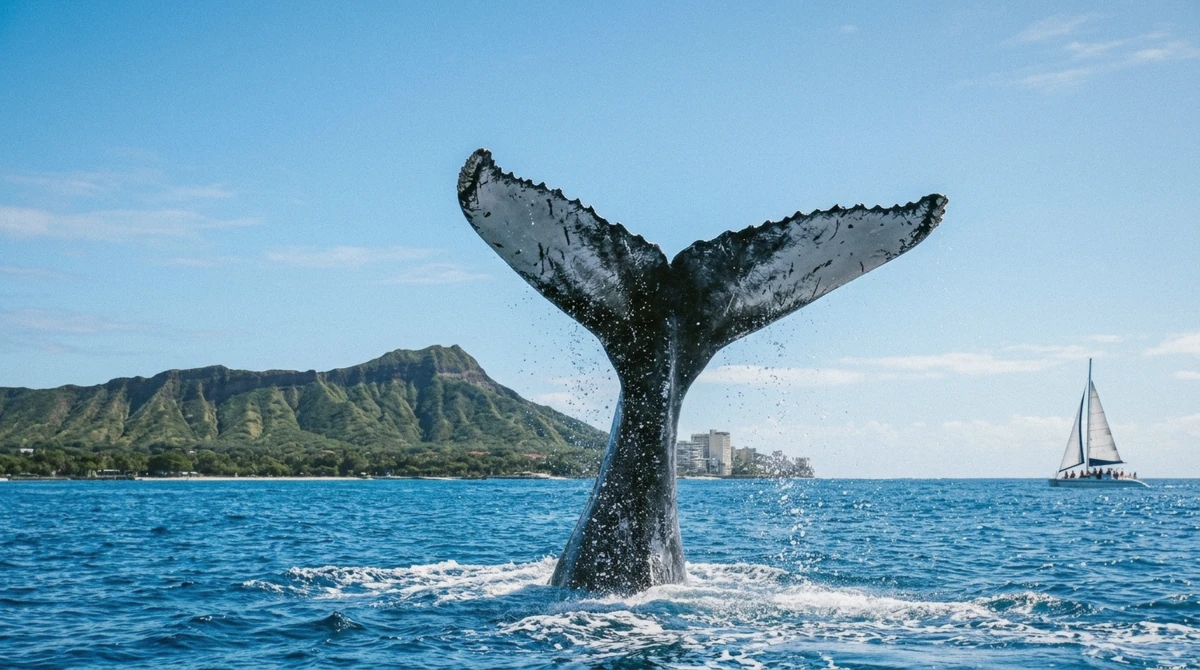
Peak Oahu whale watching season runs January through March, when sightings are closest to routine.
Quick answer
The core oahu whale watching season is mid-December through April, but the strongest weeks are January, February and March, when NOAA marks the population peak and every operator's window overlaps. December and late April are the soft edges of the season, where sightings are real but no longer close to guaranteed.
Key takeaways
- Peak window: January through March, when up to 10,000 humpbacks are wintering in Hawaiian waters and mothers travel with calves
- Early season: mid-December openings are hit-or-miss, with no-whale reviews clustering in the first two weeks
- Late season: most boats taper off by mid-April, though one listing keeps selling trips into May
- The four operators publish four different season windows, which this page explains in full below
- Mornings ride calmer than afternoons all season long, before trade winds build
- The Living Ocean sunset cruise runs its full January-to-April calendar with the catalog's highest rating
Oahu Whale Season at a Glance
The table below reads left to right: how many whales are typically around, what the water is doing, how busy the boats get, and a one-line verdict on whether that stretch is worth booking.
Season by season
Treat mid-December and mid-to-late April as the negotiable edges of the season. Everything from mid-January through March is close to a sure thing; everything outside it is a real but smaller chance.
| Season | Whale density | Water | Crowds | Verdict |
|---|---|---|---|---|
| December 15–31 | Building, hit-or-miss | Calm mornings, choppier by afternoon | Low | Early gamble, worth it for the price |
| January–March | Peak, near-routine sightings | Choppier on Ocean Count Saturdays | High on weekends | Best window of the year |
| April 1–15 | Tapering but still active | Calm mornings | Moderate | Good value, fewer boats out |
| Mid-April–May | Sparse, late stragglers only | Calm | Low | Skip unless flexible on dates |
| June–November | None reported | N/A | No whale cruises operate | Closed season, come back in winter |
December: The Season Opens, Unevenly
Pink Sails opens first, on December 15
Pink Sails Waikiki lists its own season as running from December 15 through April 15, the earliest published start date of the four operators. The first two weeks of that window are the least reliable part of the entire year: the whales are still arriving from Alaska, and the $53 catamaran is essentially betting an early booking against a still-thin population. Reviewers who sail in the first half of December report the season's highest share of no-whale trips, which is exactly why the free re-ride guarantee (covered on the homepage under how the guarantees actually work) matters most on this exact stretch of calendar.
What changes by New Year's
By the last week of December, sightings pick up noticeably as more of the migrating population settles into Hawaiian waters for the winter. Anyone locked into December travel dates should aim for the back half of the month rather than the first two weeks; the same $53 seat gets meaningfully better odds after Christmas than it does on December 16.
January to March: The Season's Peak
Every operator agrees on this stretch
January through March is the one part of the calendar where all four season windows overlap, and it lines up with NOAA's own data: the agency puts the peak of the Hawaii humpback population at January through March, with up to 10,000 whales wintering in the islands during a typical season. This is the stretch to book if the trip dates are flexible at all, and it is when reviews across all four listings describe sightings within the first 20 to 30 minutes on the water rather than a full-length search.
February and March bring the calves
Mothers traveling with newborn calves are most commonly reported in February and March, once the earliest arrivals have had time to give birth in the sheltered Hawaiian waters. A calf sighting is one of the more memorable moments operators describe, since young whales surface and breach more often than adults as they build strength and lung capacity.
Ocean Count Saturdays add crowds, not whales
The Hawaiian Islands Humpback Whale National Marine Sanctuary runs its volunteer Sanctuary Ocean Count on the last Saturday of January, February and March, when hundreds of shore-based counters staff lookout points across the island. It doesn't change how many whales are in the water, but it does mean shore lookouts and nearby parking get busier on those three specific Saturdays. Boat departures aren't affected, so a weekday sail in this window avoids the crowd without giving up any of the peak-season odds.
April and May: The Taper
Pink Sails closes on April 15
Pink Sails' printed season ends April 15, and Hawaii Nautical's own site states a shorter December-to-March window, closing even earlier. The first half of April still produces solid sightings on the boats still running; the back half is where the season visibly thins out. Reviews of trips booked in the final two weeks of April report a rising share of no-whale outings, mirroring the pattern seen in early December at the other end of the season.
The the booking platform listing keeps selling through May
The Waikiki Deluxe catamaran, sold through the booking platform, carries the widest published window of the four: December through May. That doesn't mean whales are common in May, only that this one listing keeps the product live on the calendar later than any competitor. A May booking should go in with tempered expectations and full awareness of the re-ride guarantee rather than an assumption that late spring behaves like February.
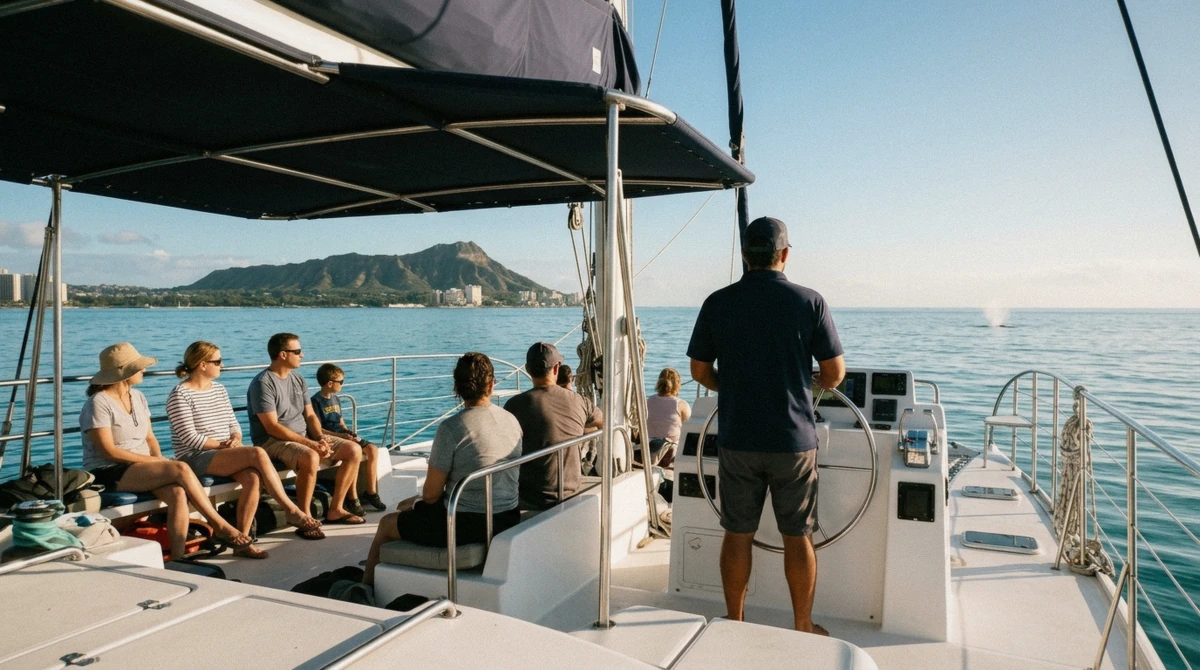
Morning departures during whale season ride calmer, before trade winds build through the day.
Why the Four Operators Publish Different Seasons
Four boats, four windows
This is the fact that makes an oahu whale watching season search so confusing in the first place: the four cruises compared on this site each state a different season on their own listing. Pink Sails Waikiki runs December 15 through April 15. Hawaii Nautical's own site prints December through March, the tightest window of the four.
The Living Ocean sunset cruise, sold on the booking platform, is scheduled to depart daily January through April. And the Waikiki Deluxe catamaran, sold on the booking platform, advertises the widest range: December through May.
None of them is wrong
Read against NOAA's own November-through-May range for humpback presence in Hawaii, all four operator windows sit inside the biologically real season, just carved differently. Hawaii Nautical's tighter December-to-March window is the most conservative, built around the months with the least risk of a no-whale trip. the booking platform's December-to-May listing is the most permissive, keeping the product bookable across the full range NOAA reports, even though the outer months carry real odds of an empty ocean. Neither operator is misrepresenting anything; they are simply choosing where to draw the line between 'whales are biologically present' and 'whales are reliably seen.'
The pattern that actually matters
Set the four marketing windows aside and look at where the no-whale reviews cluster: early December and late April, the two edges every operator's own window brushes up against in one direction or the other. That single pattern, more than any operator's printed start or end date, is the most reliable signal for when to book and when to expect a re-ride instead of a whale.
Best Time of Day, All Season Long
Mornings ride calmer
Trade winds build through the day off Oahu's south shore, so the earliest departures consistently ride the calmest water, all season long. Pink Sails' 8:00 AM sailing and the Waikiki Deluxe's 8:00 AM departure both catch the water at its flattest, before afternoon chop sets in. Whales themselves don't favor a particular hour; the advantage of a morning sail is comfort and photo clarity, not better odds of a sighting.
Sunset is the trade-off worth making once
The sunset cruise from Kewalo Basin accepts choppier water later in the day in exchange for a shot nothing else in the catalog offers: whales silhouetted against a lit-up Waikiki skyline as the light drops. It's the right call for a photography-first trip and a reasonable one for a first Oahu whale watch that wants both the animal and the postcard.
Booking by Month
Mid-to-late December
Book the Pink Sails catamaran if the trip lands here; it's the only listing open this early, and the $53 price makes the season's softest odds an easier bet to accept.
January through March
Any of the four works in peak season, so the choice comes down to budget and comfort rather than timing. The sunset cruise carries the catalog's best rating and runs its full calendar through this stretch without a gap.
April
Book early in the month rather than late. The Waikiki Deluxe catamaran is the one listing still selling confidently through April and into May, so it's the safer pick if travel dates fall late in the season and can't move.
Cost and where each tour fits
How the season overlaps with price and comfort is its own separate question. The four Oahu whale watching cruises are broken down on price, duration and who each one actually suits.
January through March is the season's safest bet by every measure that matters: operator agreement, NOAA's own data, and the review record. Mid-December and the back half of April are real windows too, just with softer odds and a guarantee that's more likely to get used.
What is the best month for whale watching in Oahu?
February. It sits inside the January-to-March peak, adds the best odds of a mother traveling with a calf, and avoids the season's early-December softness entirely.
Is whale watching better in Maui or Oahu?
Maui's Au'au Channel holds the densest concentration of whales in the state, but the season timing itself is the same. The full comparison, including cost and travel time between islands, lives on Oahu vs Maui for whale watching.
How much does it cost to whale watch in Hawaii?
On Oahu, the four cruises compared here run $53 to $119 per adult, plus a free shore-watching option. The full cost breakdown, including what the higher prices actually buy, is on is Oahu whale watching worth it.
What time of day do whales breach?
Breaching happens at any hour once whales are present; crew estimates put the odds at roughly one in twenty encounters. Morning sailings just make a breach easier to see and photograph, since the water is calmer and the light is more even.
What's the best time of day to see whales in Hawaii?
Morning, for comfort: trade winds build through the day, so the earliest departures ride the calmest water. Whales don't favor a particular hour, so a sunset sailing sees them just as often, with rougher water as the trade-off.
Why do the four Oahu whale tours list different season dates?
Each operator draws its own line inside NOAA's broader November-to-May range for whale presence. Hawaii Nautical's December-to-March window is the most conservative; the booking platform's December-to-May listing for the Waikiki Deluxe catamaran is the most permissive. Both are accurate, just measuring different thresholds of confidence.
Is it worth whale watching in early December?
It's the season's softest bet. Pink Sails opens December 15, but reviews from the first two weeks after opening show the year's highest share of no-whale trips, which is exactly what the free re-ride guarantee is for.